The legibility machine
an alien dances within you

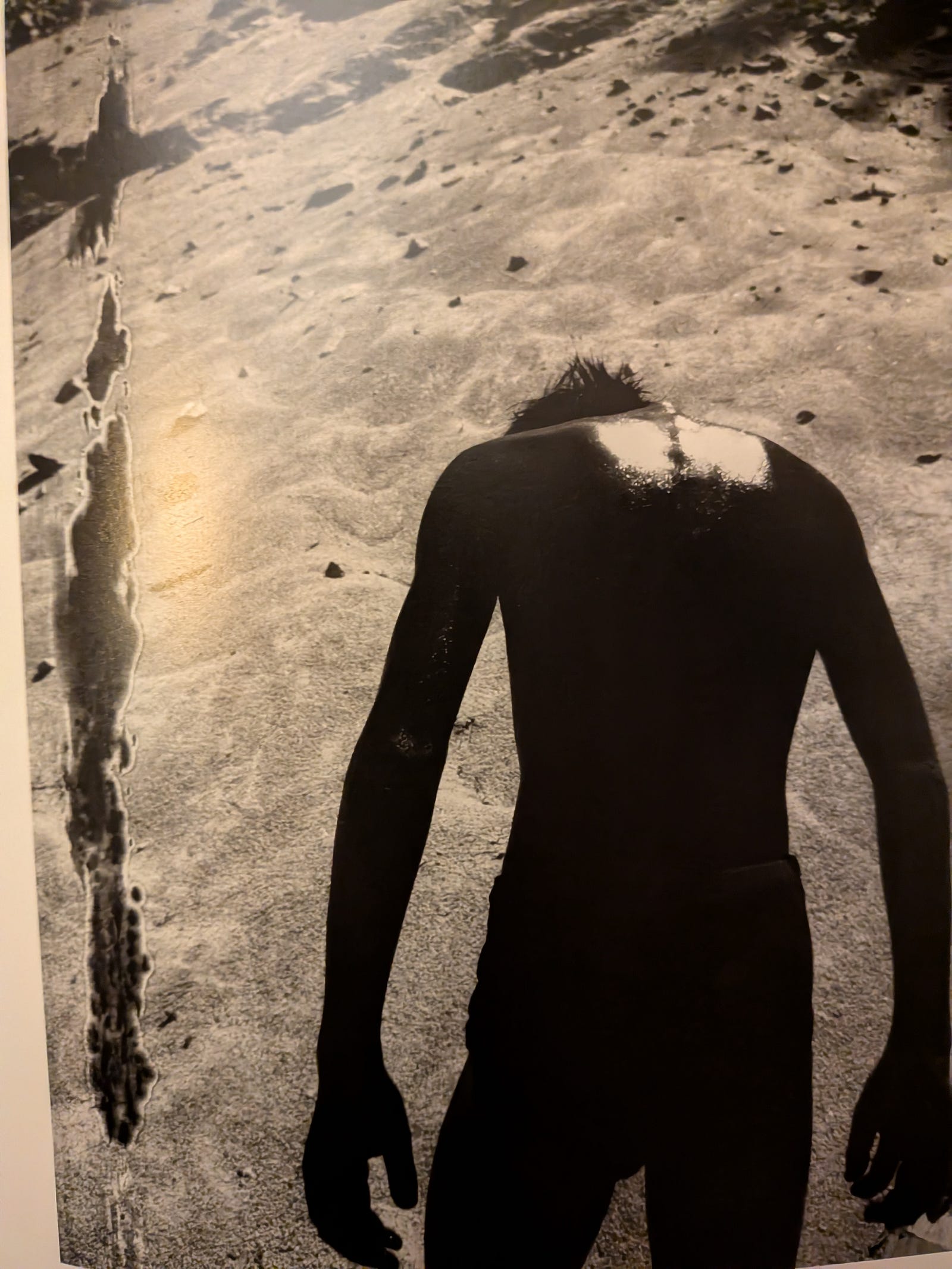
Humanity’s labor rests on a lineage no one can grasp. Generations of culture passed down through centuries. Miles and miles of land and ocean to continents of strangers, only perceived through electronic wires. A heaving mass of life love beauty death and madness ensnares all of us in complexity. To walk beyond each of our lonely marshes, we have to communicate with each other.
But it is incredibly hard, maybe impossible, to communicate down to the bare bones of the world, so we must create words and abstractions. But inevitably, the farther the ranges we seek to describe, the more complex and vast the territory, the further our descriptions err from the truth.
It is an honorable quest to search for true things. In this search we find tentative conjectures - stories, if you will. Due to the belief we have in ourselves, and a certain amount of empirical validation, we feel an urge to believe in them. We feel that to have no story to believe in is to walk alone in a dark forest, close to death. Behind every great project a simple story surely must have survived, so as to bring it to completion and rally people to its cause.
But the more ambitious we are the harder it will be to see the truth behind the story, monstrous in its scope. To measure and predict the illegible rough edges behind our clean narrative. Those phenomena that humanity has simply not yet toiled enough to understand, or that are intrisically more difficult to legibilize. Or those that people and cultures can understand, but struggle to express to each other. All these will resist capture.
And so the stories we communicate with the world at large will ignore all of this. The claims will be simplified, stripped of their nuance, and finally brush past all that is harder to faithfully capture and communicate. What are these? The arduous range of human desires, the impression of a landscape at sunset, the cause for a culture’s success or downfall, the inexplicable psychologies of a human mind - these are but a few irreverent examples, droplets in the face of the ocean.
Their illegibility does not imply they are false or limited. In fact there are things I am sure everyone knows, and that yet resist conscious understanding, or legible explanation. The danger then, is that in our search for explanations, in our civilization’s optimization to find principles, principles that can explain parts of the world and move it to our bidding, we become so attached to our stories that we forget they are false, and in that forgetting we destroy all that which has remained illegible, until it becomes fake and its memory slowly fades to a generation of reduced men and women, who find their surroundings, their concepts, their very emotions and reactions to art, their base understanding of the world - crippled, without ever knowing all they have lost.
This will happen if we let ourselves forget all that our story fails to describe, if our avid search leads us to give our stories a power they have not earned.
In the past, my conscious mind had not explicitly processed the illegible, but in the past few years I have become better at acknowledging its presence, like an alien living across the world,and within me. It emits emotions, thoughts, ideas, collective decisions – rich but strange, sometimes mustering more tacit knowledge than my conscious mind can.
From Limits to legibility, a great post which inspires my thinking here:
Imagine asking a Go grandmaster to transparently justify his moves to you, and to play the moves that are best justified - if he tries to play that way, he will become a much weaker player. A similar thing applies to AlphaGo - if you allocate computational resources in such a way that a much larger fraction is consumed by tree search at each position, and less of the neural network is used overall, you will get worse outputs
If you believe in a more simple world it will appear simpler, and you will not notice what escapes your description. Only think in narratives and find yourself chained to them. Try to turn everything into probabilities and you will ignore all you do not know how to predict. So, believe in the depth and complexity of things, in and out of you, and you will see much more, and also become more, if you succeed at moving despite it all.
The world around you, the ideas you hear, are strongly selected by the fact certain things are easier to communicate and measure. Externalities in economic markets are hard to reward, politicians are constrained to communicate in unfaithful ways, and AI climbs a steep ladder of legible reward, at the risk of convincing us the things it cannot do no longer matter.
But despite this, our world is full of illegible objects, and they provide us with much of our meaning. Why? Because as humans we can act on the depths we perceive, even those we cannot express. And there exists, inside you too, now! a creature that acts with the untold wisdom of centuries, of everything you have seen in your life, what you have been raised on, what you do not even remember, all that you do not even know you have integrated, but yet you use to move in the world. Humans are powerful. The decisions we make, the people we choose to support, the art we create, are all channels for us to express that latent force inside of us.
To me one of the most beautiful things one can do with their life is to legibilize more of the things inside them, and outside in the world, without reducing them. To show a fragment of these to other humans, make them clear, make them more real by giving them a new voice. In doing so, he expands people’s sense of meaning and possibility.
I myself want to build technologies that help humans understand and pay attention to more of the world. I am motivated to improve the ability of the machines of the near-future to understand more of the illegible, tacit knowledge of human life, so we can better cooperate with them. I think it is possible they can transform the face of the Earth without speaking this language, and we would be the worse for it.
Car enfin qu’est-ce que l’homme dans la nature ? Un néant à l’égard de l’infini, un tout à l’égard du néant, un milieu entre rien et tout. Infiniment éloigné de comprendre les extrêmes, la fin des choses et leur principe sont pour lui invinciblement cachés dans un secret impénétrable, également incapable de voir le néant d’où il est tiré, et l’infini où il est englouti.
- Blaise Pascal
bro spent so much effort to defend his vagueposting
Yes. I like thinking about this in terms of Carlsmith's 'On the abolition of man'. The true Tao is not the systems that emerge and the maps we create for our intuitions; it is the latent force generating them.
I think generally value lock-in is pretty far down my ranking of most important AI risks, but this kind of latent-force trapping seems pretty bad and definitely possible. There is definitely a sense in which our modern world is already overmapped. However there is also potential for it to grow less overmapped, I think, if we do AI right and/or get lucky.
One thing I'm interested in is that the more able an ASI is to capture our latent force, presumably the fuzzier it will have to be, because we are fuzzy. But for other reasons we want ASI to be really un-fuzzy, so we can be sure it's safe. What do we do? Maybe we use really unfuzzy AIs to build a big fuzzy AI?
Maybe this isn't a problem because unfuzzy AIs haven't really worked in practice?